
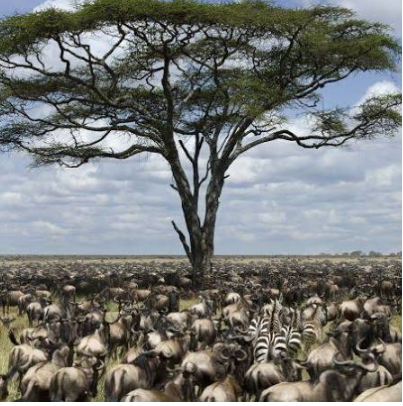

Every year, well over a million wildebeest, accompanied by hundreds of thousands of zebra and gazelle, travel in a vast loop between Tanzania’s Serengeti ecosystem and Kenya’s Maasai Mara. Predators shadow the herds, rivers test them, and thousands of calves arrive within weeks of each other. A Great Migration safari in Tanzania is one of the most sought-after wildlife experiences in the world, but it takes more planning than a standard game-drive trip. This guide explains how the migration works, where to be and when, what it costs, and how to build a trip that puts you in the right place.
What Is the Great Migration?
The Great Migration is not a single event with a start and end date. It is a continuous, circular movement driven by rainfall and the grass it produces. The herds move in search of fresh grazing and water, following patterns that have repeated for countless generations.
Most of the cycle takes place inside Tanzania’s Serengeti, with the herds typically crossing into Kenya’s Maasai Mara for part of the year. This means a Tanzanian safari gives you access to much of the migration’s calendar, including calving and many of the river crossings.
Because the movement depends on rain, timing varies from year to year. Any operator who promises a precise date and location is overselling. The right approach is to plan around the general pattern and stay flexible.
The Migration Cycle Through the Year
January to March: Calving on the Southern Plains
The herds gather on the nutrient-rich short-grass plains in the southern Serengeti and the Ndutu region. Calving usually peaks in February, with hundreds of thousands of calves born over a few weeks. Predators such as lions, cheetahs, and hyenas are drawn in, so this phase offers intense wildlife drama on open terrain with good visibility.
What to expect: newborn animals, frequent predator action, green landscapes, and generally lower prices than the dry-season peak.
April to May: Moving North Through the Central Serengeti
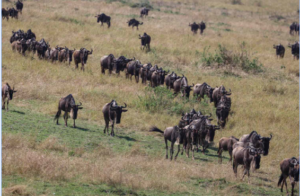
As the long rains arrive, the herds begin streaming north and west. They pass through the central Serengeti and the Moru Kopjes area. Grass is tall and conditions are wet, so visitor numbers are low and some camps close.
What to expect: long columns of animals, dramatic skies, quiet parks, and the lowest prices of the year, with the trade-off of difficult weather.
June to July: The Western Corridor and the Grumeti River
The herds move through the western corridor, where they may face crossings of the Grumeti River. These crossings can be dramatic, with crocodiles waiting, though they are less predictable than those on the Mara River. Many travelers use this phase to see the migration with fewer vehicles than the peak months.
What to expect: early-season river action, drying landscapes, and rising demand.
July to October: The Northern Serengeti and the Mara River
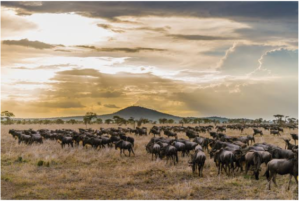
This is the phase most travelers picture. Herds gather in the northern Serengeti and approach the Mara River, where they cross back and forth in dense, chaotic waves. Crossings depend on the herds’ mood, and animals may gather at the bank for hours or days before committing.
What to expect: the best odds of seeing dramatic river crossings, excellent dry-season game viewing, and the highest prices and visitor numbers.
November to December: The Return South
Short rains trigger the herds’ return to the southern plains. Crowds thin, the landscape turns green, and migratory birds arrive. It is a quieter way to see large herds on the move.
What to expect: fewer visitors, lush scenery, and good value.
Choosing the Right Region for Your Dates
Because the herds move, your camp location matters as much as your travel month. Here is how the main areas line up with the migration:
- Southern Serengeti and Ndutu: best for calving season, roughly January to March.
- Central Serengeti (Seronera): strong year-round big-cat sightings and a good base when the herds pass through.
- Western Corridor and Grumeti: useful for early-season crossings, roughly June to July.
- Northern Serengeti (Kogatende and Lamai): best for Mara River crossings, roughly July to October.
A well-built itinerary may include more than one region so that you are never far from the action, even if the herds shift earlier or later than expected.
Mobile Camps vs. Permanent Lodges
This decision shapes your whole safari.
Seasonal mobile camps relocate with the herds, which keeps you close to the animals and reduces travel time. They are small, atmospheric, and offer a classic bush feel. Standards range from comfortable mid-range to high-end luxury.
Permanent lodges and camps offer consistent facilities and are reliable year-round. They are good bases for resident wildlife, but may sit far from the herds during certain months.
Many travelers combine both, using permanent camps in central areas and mobile camps closer to the herds. When comparing options, ask the operator where the herds are likely to be during your dates and how far each camp is from the expected action.
How Much Does a Great Migration Safari Cost?
Migration safaris are generally priced at the higher end of Tanzania’s range, particularly in the peak months. Broad 2026 market guides put typical Tanzania safari costs at roughly $250 to $1,500 or more per person per day, depending on accommodation and season. Camps located in prime migration areas during peak periods tend to sit toward the upper end. safarifind
Several fixed costs add up:
- Park fees: Serengeti fees for foreign adults are typically in the range of roughly $70 to $85 per person per day, though sources vary.
- Concession fees: staying overnight inside the park adds a further per-person charge, which one source lists at about $70.80 per person per 24 hours in the Serengeti. dumaexplorer
- Vehicle and guide costs: these are shared between travelers in a private vehicle.
- Optional extras: a hot air balloon flight over the Serengeti costs around USD 550 to 600 per person. cheetahsafaris
For planning, many mid-range migration trips of six to seven days fall roughly between $3,500 and $6,000 per person, with luxury trips costing considerably more and budget camping trips costing less. These are estimates, and actual prices depend on the operator, season, and itinerary. Always request a written breakdown of inclusions.
How to Maximize Your Chances of Seeing a River Crossing
River crossings are the most photographed part of the migration, and also the least predictable. A few practical points help:
- Stay in the north for several nights. Crossings can be hours or days in the making, so a single night is a gamble. Three to four nights improves your odds considerably.
- Choose an experienced guide. Good guides read herd behavior and positioning, and they know which crossing points are active.
- Be patient. Herds often gather at the river’s edge, retreat, and gather again before crossing.
- Consider a full-day game drive with a packed lunch, so that you aren’t forced to leave a sighting at the critical moment.
- Accept uncertainty. Even in peak months, crossings are never guaranteed. The surrounding wildlife and landscapes still make the trip worthwhile.
Responsible Viewing
The migration draws large numbers of vehicles to certain locations, and poor behavior can disturb the animals. A responsible safari means:
- Staying on designated tracks and respecting distance rules
- Avoiding crowding crossing points
- Keeping noise to a minimum
- Choosing operators who prioritize wildlife welfare and limit vehicle numbers
- Supporting camps with strong conservation and community practices
Good operators will brief you on these points, and your guide should always put the animals’ wellbeing before getting the shot.
Best Time Overall
If your goal is dramatic river crossings, aim for roughly July to October and base yourself in the north. If you want calving and predator action, aim for January to March in the south. If you want quieter conditions, consider the shoulder periods and accept more variability in where the herds are. There is no single best month, only the one that fits your priorities and flexibility.
Practical Planning Tips
- Book early. Camps in prime migration areas often sell out nine to twelve months ahead for peak dates.
- Allow enough time. Six to eight days gives you a good chance to cover more than one region.
- Stay flexible. Herd movements change with rainfall, and a good operator will adjust your plan.
- Pack layers. Mornings can be cold, especially from June to August.
- Bring a long lens, if you’re a photographer, and spare batteries and memory cards.
- Budget for tips. A common guideline is USD 10 to 20 per person per day for the guide, plus smaller amounts for camp staff. cheetahsafaris
- Handle health and entry requirements early, including vaccinations, malaria prevention, insurance, and your visa.
Conclusion
A Great Migration safari in Tanzania delivers one of the most spectacular wildlife experiences on Earth, from the calving plains of the south to the river crossings of the north. Success comes from understanding that the migration is a moving cycle, not a fixed event. Choose your travel month based on what you most want to see, position yourself in the right region, allow enough nights to improve your odds, and work with a licensed, experienced operator who is honest about uncertainty. Done well, you won’t just see the herds, you’ll understand why this journey has captivated travelers for generations.
Migration timing, park fees, and prices change, and published figures vary between sources. Confirm current conditions, rates, and inclusions with your operator before you book.
Key Takeaways
- The Great Migration is a continuous annual cycle, not a single event with fixed dates.
- January to March offers calving and predator action in the southern Serengeti and Ndutu.
- July to October offers the best chance of Mara River crossings in the northern Serengeti.
- Camp location matters as much as travel month, so match your base to where the herds are likely to be.
- Mobile camps keep you close to the herds, while permanent lodges offer consistent comfort.
- Allow three to four nights in one region to improve your odds of key sightings.
- Book early, stay flexible, and choose a licensed, experienced operator.
Frequently Asked Questions
- When is the best time to see the Great Migration in Tanzania?
It depends on what you want to see. January to March is best for calving, and July to October is best for northern river crossings. The migration happens year-round, so there is something to see in most months. - Is the Great Migration guaranteed?
The herds are always moving, but their exact location varies with rainfall. No operator can guarantee a specific sighting, especially a river crossing, so flexibility matters. - Where does the Great Migration take place?
Within the Serengeti ecosystem in Tanzania, with the herds usually crossing into Kenya’s Maasai Mara for part of the year. - How many days do I need for a migration safari?
Six to eight days is a good target, with at least three to four nights in the region where you most want to see the herds. - How much does a Great Migration safari cost?
Costs vary widely by season, camp, and style. Many mid-range trips of six to seven days run from roughly $3,500 to $6,000 per person, with luxury trips costing more and camping trips costing less. Always confirm current prices. - Can I see river crossings in every month?
No. They most often occur between roughly July and October in the north, with some earlier activity on the Grumeti River in the west. Even then, timing is unpredictable. - Is a mobile camp better than a permanent lodge?
Mobile camps stay closer to the herds and feel more authentic, while permanent lodges offer more facilities and consistency. Many travelers combine both. - Is the migration worth seeing in the green season?
Yes, for the right traveler. January to March brings calving, and November to December offers quieter conditions, lush scenery, and lower prices. - Should I book a private or shared vehicle?
A private vehicle gives you control over timing, which is valuable when waiting at a crossing point. Shared vehicles cost less but are less flexible. - How far ahead should I book?
For peak migration months and prime locations, book nine to twelve months ahead. For quieter periods, three to six months is usually enough.
I can also put this in a file, or adapt the tone, audience, or target operator if you’d like.